
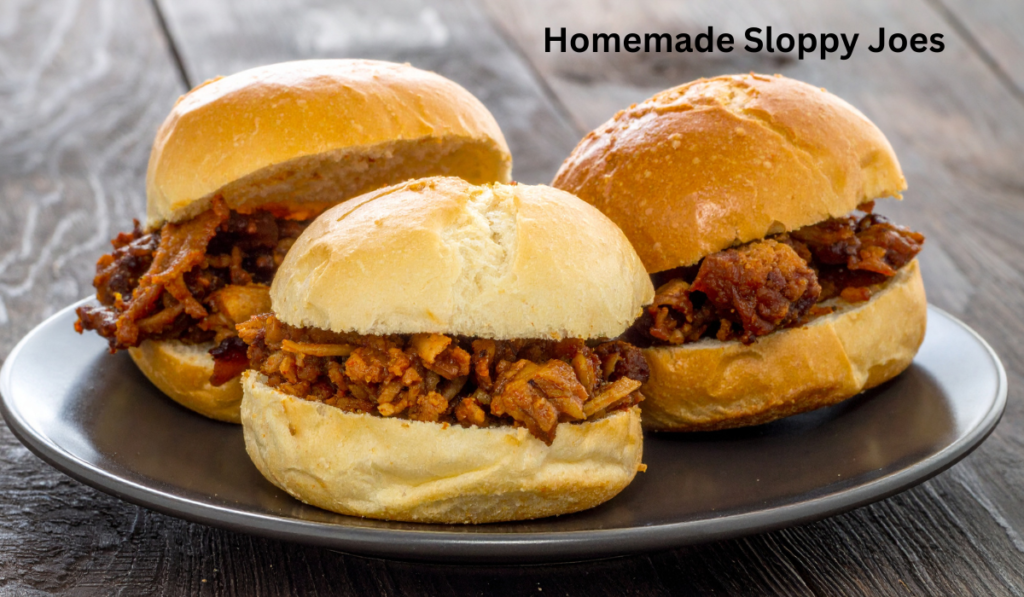

My kids grew up on sloppy joes, and for a long time, that meant sloppy joes out of a can. I’m not embarrassed to admit it — that’s just how a lot of weeknight dinners went in my house back then. It wasn’t until years later, once things had slowed down a little, that I actually sat down and figured out how to make them from scratch. And once I did, I never bought the canned version again.
What Changed When I Started Making These From Scratch
The first time I made sloppy joes homemade, I honestly expected it to taste pretty close to the canned version, just fresher. It didn’t. It tasted better in a way I wasn’t fully prepared for — richer, less one-note sweet, with actual depth to the sauce instead of that flat, sugary taste I’d gotten so used to over the years.
That’s when I started paying closer attention to what I was doing differently. The biggest thing I noticed was the grease. My instinct the first time was to drain the beef completely and start the sauce with fresh butter or oil, the way I would with most other dishes. But I tried saving a bit of that rendered beef fat instead, cooking the onion and garlic in it, and the flavor difference was noticeable right away. It carries a richness through the whole dish that you lose if you drain it all away and start clean.
I also learned, mostly through trial and error, that this is a recipe where balance matters more than any single ingredient. The first couple of times I made it, my sauce came out too sweet, so I cut back on the brown sugar slightly and added a touch more Worcestershire to balance it out. Another time I got heavy-handed with the cayenne, thinking a little more heat couldn’t hurt, and ended up with something my youngest wouldn’t touch. Now I measure the cayenne carefully and let people add hot sauce at the table if they want more kick.
What I appreciate most about this recipe now, after making it more times than I can count, is how much control it gives me. With the canned stuff, I never really knew what I was serving my family beyond what was printed on the label. Making it myself means I know exactly what’s going into it, I can adjust it based on who’s eating it that night, and I’m not left with a half-used jar of sauce taking up space in my fridge for the next three weeks.
A Few Things I’ve Picked Up Along the Way
- Don’t skip saving the grease. I know it sounds like an unnecessary step, but after comparing it both ways, cooking the onion and garlic in a bit of the reserved beef fat instead of starting fresh makes a real difference in flavor.
- Taste as you go, especially with the sugar and cayenne. I’ve over-sweetened and over-spiced this more than once. Now I add the brown sugar and cayenne gradually and taste before committing to the full amount listed.
- Let it simmer the full 5 minutes, even if it looks done sooner. I used to rush this step on busy nights, and the sauce always tasted thinner and less developed. Giving it the full simmer time lets the flavors actually come together.
- This scales up easily. On weeks when I know we’ll want leftovers, I’ll double the recipe. It reheats well and, if anything, tastes even better the next day once the sauce has had time to sit.
Ingredients
- 1 lb ground beef, browned
- 1/2 cup finely chopped onion
- 3 cloves garlic, minced
- 1 cup ketchup
- 1/4 cup water
- 1 tbsp light brown sugar
- 1 tbsp Worcestershire sauce
- 1/4 tsp cayenne pepper
- Salt and pepper, to taste
- 4 hamburger buns
Directions
- Heat a large, high-sided skillet over medium heat and add the ground beef. Cook while stirring and breaking it up with a spoon until it’s completely cooked through.
- Strain the grease from the beef, but don’t throw it all out — set aside about 1/4 cup of it. This is the step I almost skipped the first time I made this from scratch, and it’s the one that makes the biggest difference in flavor.
- Add the reserved 1/4 cup of grease back to the pan along with the onion and garlic. Cook for a few minutes, until tender.
- Stir in the ketchup, water, brown sugar, Worcestershire sauce, and cayenne, then season with salt and pepper. Let it simmer for 5 minutes, giving the flavors time to fully come together.
- Serve on hamburger buns while warm.
After years of making the canned version because it was easy, this homemade one has completely replaced it in my kitchen. It takes barely any more effort, but the flavor isn’t even close — and that’s the kind of trade worth making on a busy weeknight.