
Few morning drinks have sparked as much curiosity as the humble pink salt drink. With just a handful of kitchen staples, it has found a place in wellness routines across the globe. Yet for all its popularity, genuine confusion persists about what actually goes into it, which ingredients matter, and which are simply add-ons promoted through social media trends.
This guide addresses that confusion head-on. It walks through every ingredient used in pink salt recipes — core components and optional additions alike — explains the function each one serves, and provides a clear, practical preparation method. No filler, no inflated claims. Just an honest, thorough breakdown of what you are actually putting in your glass.
Table of Contents
What Is the Pink Salt Drink?
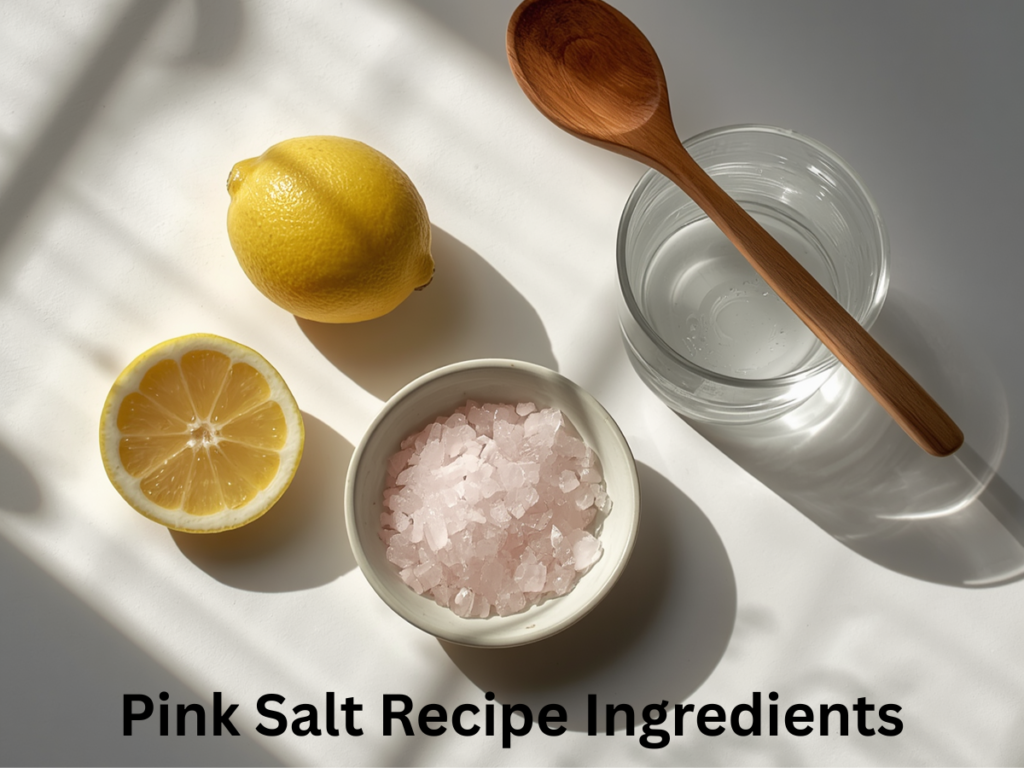
The pink salt drink is a mineral-based hydration beverage made by dissolving a small amount of Himalayan pink salt into warm water. In its most stripped-back form, it contains only two ingredients: salt and water. Most people also add fresh lemon juice, making a three-ingredient version that has become the most widely recognized form of the recipe.
It is typically consumed in the morning before eating or drinking anything else. The rationale is straightforward: overnight rest causes mild fluid and electrolyte losses, and a warm saline drink can help restore balance more effectively than plain water alone. The lemon juice adds a mild acidic note and contributes a small amount of vitamin C.
Key Point: The drink’s core value lies in simple electrolyte replenishment — not in any exotic ingredient or complex preparation process.
Core Ingredients: The Essential Two
1. Himalayan Pink Salt
Himalayan pink salt is the defining ingredient of this recipe. Without it, the drink has no claim to its name. It is a rock salt extracted from underground deposits in the Khewra Salt Mine region of Pakistan — one of the oldest and largest salt mining areas in the world. The salt formed hundreds of millions of years ago when ancient seas evaporated and left behind dense mineral layers.
Its pink color is caused by iron oxide, the same compound responsible for the rust color in red soils. The salt is predominantly sodium chloride, which accounts for roughly 95 to 98 percent of its composition. The remaining fraction contains trace amounts of other naturally occurring minerals.
| Mineral | Presence in Pink Salt | Role in the Body |
| Sodium | Primary component (~96–98%) | Regulates fluid balance, nerve signals, and muscle contractions |
| Chloride | Paired with sodium | Supports digestion and acid-base balance |
| Iron Oxide | Trace (gives pink color) | Oxygen transport in red blood cells |
| Potassium | Trace | Counterbalances sodium; supports heart rhythm |
| Magnesium | Trace | Muscle relaxation, energy metabolism |
| Calcium | Trace | Bone structure, nerve function |
📌 Note: The trace minerals in pink salt appear in amounts far too small to serve as meaningful dietary sources. Their primary significance is geological and aesthetic, not nutritional.
For use in drinks, fine-ground pink salt is strongly preferred over coarse crystals. Coarse granules dissolve slowly and unevenly, which can produce bursts of intense saltiness rather than a smooth, uniform flavor throughout the drink.
2. Warm Filtered Water
Water is the delivery medium for every other ingredient in this recipe. Its temperature and quality both influence how the drink tastes and how effectively the salt dissolves.
| Water Type | Suitability | Notes |
| Filtered tap water | Excellent | Removes chlorine taste; most practical option for daily use |
| Still mineral water | Very good | Adds naturally occurring minerals; slightly changes mineral profile |
| Boiled and cooled water | Good | Effective if filtered water is unavailable |
| Unfiltered tap water | Acceptable | May carry a chlorine aftertaste depending on local supply |
| Sparkling / carbonated water | Not recommended | Creates foam when salt is added; unpleasant texture |
| Distilled water | Not ideal | Completely mineral-free; produces a flat, hollow taste |
The ideal temperature range is between 100°F and 120°F (38°C to 49°C) — warm enough to dissolve the salt quickly but comfortable to sip without burning. Water that is too hot can intensify the saltiness and make the drink unpleasant to consume slowly, which is the recommended approach.
Optional Ingredients: What Each One Adds
Beyond the two core components, a range of optional ingredients appear across different versions of this recipe. None of them define the drink, but each serves a distinct purpose depending on personal preference and health goals.
Fresh Lemon Juice
Lemon juice is by far the most common addition and has effectively become a standard component in the most popular version of this drink. It contributes several things simultaneously:
- Flavor balance — the acidity cuts through the saltiness and makes the drink more palatable for most people
- Mild digestive stimulation — citric acid may help prompt stomach acid production and support early-morning digestion
- Vitamin C — a tablespoon of fresh lemon juice provides a small but meaningful amount of ascorbic acid
- Alkalizing effect — despite being acidic before consumption, lemon juice has an alkaline ash effect once metabolized
Freshly squeezed lemon juice is preferable to bottled versions. Pre-packaged lemon juice often contains preservatives and has a less vibrant, sometimes bitter flavor profile compared to fresh citrus.
Raw Honey
Raw honey is occasionally added for sweetness and to soften the sharp saline edge of the drink. It also introduces small amounts of naturally occurring enzymes, antioxidants, and antimicrobial compounds not found in refined sugar.
Important consideration for fasting: honey contains fructose and glucose, which triggers an insulin response. Adding honey will end a fasting window. Those using this drink specifically within intermittent fasting protocols should omit it entirely.
Apple Cider Vinegar
Apple cider vinegar (ACV) appears in some recipe variations as an alternative to, or alongside, lemon juice. It is made through a double fermentation process that produces acetic acid and a small amount of beneficial compounds including the ‘mother’ — strands of proteins, enzymes, and bacteria visible in unfiltered versions.
ACV has a stronger, more pungent flavor than lemon juice and is better suited to those who have already developed a taste for it. Starting with just half a teaspoon is advisable before working up to a full tablespoon, as undiluted or excessive amounts can be harsh on tooth enamel and the esophagus.
Cayenne Pepper
A very small pinch of cayenne pepper — typically no more than 1/16 of a teaspoon — is sometimes incorporated for warmth and mild circulatory stimulation. Cayenne contains capsaicin, the compound responsible for the heat sensation in chili peppers. It can make the drink feel more warming and invigorating, particularly on cold mornings.
It is worth noting that cayenne can cause stomach irritation in individuals with acid reflux, gastritis, or sensitive digestive systems. Those with such conditions should avoid this addition.
Fresh Ginger
Grated or sliced fresh ginger is a less common but increasingly popular addition to morning wellness drinks. It contributes a spicy, slightly sweet warmth and has a well-documented record of supporting digestive comfort and reducing nausea. It pairs well with both lemon and honey.
The easiest method is to steep a few thin slices in the warm water for two to three minutes before adding the salt and other ingredients, then remove them before drinking.
Turmeric Powder
A small pinch of ground turmeric can be stirred into the drink for an earthy flavor and the addition of curcumin, its active compound. Curcumin is studied for its anti-inflammatory properties. Adding a tiny amount of black pepper alongside turmeric significantly improves curcumin absorption due to the presence of piperine.
Complete Ingredient Reference Table
| Ingredient | Amount (1 serving) | Role | Required? |
| Himalayan pink salt (fine-ground) | 1/8 to 1/4 tsp | Electrolyte base; primary flavoring | Yes |
| Warm filtered water | 8 fl oz (240 ml) | Dissolves ingredients; hydration base | Yes |
| Fresh lemon juice | 1 tbsp (15 ml) | Flavor balance; vitamin C; digestion | Optional (common) |
| Raw honey | 1/2 tsp | Natural sweetener; enzymes | Optional |
| Apple cider vinegar | 1 tsp | Acidity; digestive support | Optional |
| Cayenne pepper | Tiny pinch (~1/16 tsp) | Warming sensation; circulation | Optional |
| Fresh ginger | 2–3 thin slices | Digestive comfort; warmth | Optional |
| Ground turmeric | 1/8 tsp | Anti-inflammatory support; color | Optional |
Recipe Variations by Goal
Different preparation goals call for different ingredient combinations. Below are four distinct versions tailored to specific needs.
Version 1 — Pure Fasting Version (Zero Calories)
- 8 fl oz warm filtered water
- 1/8 tsp fine-ground Himalayan pink salt
- 1 tbsp fresh lemon juice
This combination contains no macronutrients and will not interrupt a metabolic fasting state. The sodium and chloride help maintain electrolyte balance during the fasting window, while lemon juice adds flavor without adding meaningful calories.
Version 2 — Post-Workout Replenishment
- 8 fl oz warm filtered water
- 1/4 tsp fine-ground Himalayan pink salt
- 1 tbsp fresh lemon juice
- 1/2 tsp raw honey
- Tiny pinch of cayenne pepper
After physical activity, the body has used both glycogen (replenished partly by honey) and electrolytes (replenished by the salt). This version provides a more complete recovery drink while remaining easy to prepare.
Version 3 — Digestive Morning Ritual
- 8 fl oz warm filtered water
- 1/8 tsp fine-ground Himalayan pink salt
- 1 tbsp fresh lemon juice
- 1 tsp apple cider vinegar (unfiltered, with the mother)
- 2–3 thin slices fresh ginger (steeped 2 minutes, then removed)
This version is aimed at digestive comfort. The combination of lemon juice, ACV, and ginger stimulates gastric activity and may ease bloating or sluggish digestion, particularly for those who experience discomfort in the mornings.
Version 4 — Anti-Inflammatory Boost
- 8 fl oz warm filtered water
- 1/8 tsp fine-ground Himalayan pink salt
- 1 tbsp fresh lemon juice
- 1/8 tsp ground turmeric
- Tiny pinch of black pepper (to activate curcumin)
- 1/2 tsp raw honey (to balance the earthy turmeric flavor)
The turmeric and black pepper combination is backed by nutritional science as a way to enhance curcumin bioavailability. This version has a warm golden color and an earthy, slightly sweet flavor profile.
Step-by-Step Preparation
| Step | Action | Detail |
| 1 | Heat the water | Warm 8 fl oz of filtered water to 100–120°F (38–49°C). Avoid boiling. |
| 2 | Add the salt | Measure 1/8 to 1/4 tsp of fine-ground pink salt and stir until fully dissolved. |
| 3 | Add lemon juice | Squeeze 1 tbsp of fresh lemon juice and stir to combine. |
| 4 | Add optional ingredients | Stir in any chosen additions — honey, ACV, cayenne, ginger, or turmeric. |
| 5 | Taste and adjust | Sample the drink. Add a drop more lemon if too salty, or a pinch more salt if too flat. |
| 6 | Sip slowly | Drink over 2–3 minutes. Wait 10–15 minutes before food or coffee. |
Tip: Use a wooden or silicone stirrer rather than a metal spoon. Some people notice a faint metallic taste when using stainless steel utensils with citrus and salt together.
Ingredient Substitutions Guide
| Original Ingredient | Substitution | Trade-Off |
| Himalayan pink salt | Sea salt or kosher salt | No color difference; similar sodium content; may lack trace minerals |
| Himalayan pink salt | Celtic grey salt | Slightly higher moisture content; similar mineral profile |
| Fresh lemon juice | Fresh lime juice | More tart, slightly less sweet; works equally well |
| Fresh lemon juice | Orange juice (small amount) | Adds sugar and calories; breaks a fast; sweeter flavor |
| Raw honey | Maple syrup | Similar sweetness; different antioxidant profile; breaks a fast |
| Apple cider vinegar | White wine vinegar | Less complex flavor; no live cultures or enzymes |
| Fresh ginger | 1/4 tsp ground ginger | Convenient but milder flavor and less aromatic |
Where to Find Himalayan Pink Salt
Himalayan pink salt has moved well beyond specialty health stores and is now widely available across most retail channels in the United States and internationally.
| Store Type | Typical Location in Store | What to Look For |
| Mainstream supermarkets | Spice and seasoning aisle | Fine-ground, food-grade label, clear packaging |
| Health food stores | Natural salts or bulk food section | Unrefined, additive-free options often available |
| Warehouse / bulk stores | Pantry staples or bulk seasonings | Large quantities at lower cost per ounce |
| Online retailers | Pantry or health supplements section | Look for food-grade certification; avoid decorative lamp salt |
| Ethnic grocery stores | Imported foods or cooking essentials | Often available at lower prices per unit |
📌 Note: Always verify the label reads ‘food grade’ or ‘suitable for consumption.’ Decorative pink salt products, such as those used in salt lamps, are not manufactured to food safety standards and should never be used in food or drinks.
Equipment You Will Need
| Item | Purpose | Notes |
| Heat-safe glass or mug (10–12 oz) | Holds hot liquid safely | Thin-walled glasses may crack with very hot water |
| Measuring spoons | Ensures accurate salt quantity | Essential — even small excess salt changes the taste significantly |
| Fine-mesh strainer (optional) | Catches ginger or turmeric sediment | Only needed if using whole spices |
| Small whisk or stirring spoon | Fully dissolves salt crystals | Silicone or wooden preferred over metal |
| Citrus juicer (optional) | Extracts lemon juice cleanly | Hand squeezing works fine; strainer catches seeds |
Nutritional Snapshot Per Serving
The nutritional values below reflect the standard three-ingredient version: water, pink salt (1/4 tsp), and lemon juice (1 tbsp).
| Nutrient | Amount | Context |
| Calories | ~4–10 kcal | Primarily from lemon juice; effectively negligible |
| Sodium | ~580 mg (1/4 tsp) | ~25% of the 2,300 mg daily recommended limit |
| Carbohydrates | ~1–2 g | From lemon juice; minimal |
| Vitamin C | ~7 mg | From 1 tbsp lemon juice; modest contribution |
| Potassium | ~20 mg | Trace; from both salt and lemon |
| Fat / Protein | 0 g | None in any standard version |
Sodium Awareness: 1/4 tsp of pink salt contributes approximately 580 mg of sodium. If you follow a low-sodium diet or have blood pressure concerns, reduce the amount to 1/8 tsp (approximately 290 mg) or consult a healthcare provider before making this a daily habit.
Safety Considerations by Audience
| Who | Consideration | Recommended Action |
| Healthy adults | Generally safe in moderation | Use 1/8 to 1/4 tsp per serving, once daily |
| People with hypertension | Added sodium may elevate blood pressure | Consult a doctor; consider plain lemon water instead |
| Those with kidney disease | Kidneys may struggle to excrete excess sodium | Avoid without medical guidance |
| Heart disease patients | Extra sodium increases cardiovascular strain | Discuss with a cardiologist first |
| Pregnant individuals | Sodium needs vary during pregnancy | Consult a midwife or OB before starting |
| Children | Sodium tolerance is lower per body weight | Not recommended as a routine drink for children |
| People on diuretics | Diuretics alter electrolyte balance significantly | Consult prescribing physician |
📌 Note: If you currently avoid iodized table salt and replace it with pink salt, be aware that Himalayan pink salt is not iodized. Ensure dietary iodine comes from other sources such as dairy, eggs, fish, or seaweed.
Frequently Asked Questions
What are the three main ingredients in the pink salt trick?
The three-ingredient version of this drink uses fine-ground Himalayan pink salt, warm filtered water, and freshly squeezed lemon juice. This combination is the most widely prepared and recognized form of the recipe.
Can I use regular table salt instead of Himalayan pink salt?
Yes, from a purely functional standpoint. Regular table salt is also sodium chloride and will dissolve and hydrate the body in the same way. The differences are cosmetic (color), textural (grain size), and the fact that table salt is typically iodized while pink salt is not. The drink will not be identical in taste, but it will serve the same basic purpose.
Does the temperature of the water matter?
Water temperature affects two things: how quickly the salt dissolves and how comfortably the drink can be consumed. Warm water dissolves fine-ground pink salt almost instantly. Cold water requires significantly more stirring and may leave undissolved crystals. The temperature does not affect the nutritional content of the drink, but most people find warm water more pleasant on an empty stomach.
Will adding honey break my intermittent fast?
Yes. Honey contains natural sugars (fructose and glucose) that trigger an insulin response, which ends a metabolic fasting state. Anyone using this drink within a fasting protocol should prepare the version without honey. The base recipe of salt, water, and lemon juice contains no macronutrients in meaningful amounts and does not interfere with fasting.
How much pink salt is safe to use per serving?
The recommended range for a single serving is 1/8 to 1/4 teaspoon. This delivers approximately 290 to 580 mg of sodium. Exceeding this regularly and consistently risks pushing daily sodium intake above recommended limits, particularly for those whose diets already contain substantial sodium from food.
Is fine-ground or coarse pink salt better for drinks?
Fine-ground pink salt is considerably better suited to drinks. Coarse crystals take much longer to dissolve, often do not fully dissolve without vigorous stirring, and can create an uneven salt intensity throughout the drink. Fine-ground salt distributes evenly and integrates smoothly within seconds of stirring.
Can I prepare the drink the night before?
You can mix the salt and water in advance and refrigerate it, but it is best to add fresh lemon juice immediately before drinking to preserve its flavor and vitamin C content. Lemon juice begins to oxidize and lose potency once exposed to air, even in a sealed container. Ginger or turmeric, if used, should also be added fresh.
You may also find these related guides helpful for deeper understanding of pink salt routines and natural wellness trends: Pink Salt Morning Ritual Guide https://mimilovescooking.com/pink-salt-morning-ritual-guide/, Pink Salt Weight Loss Breakdown https://mimilovescooking.com/pink-salt-weight-loss/, and Lemon Balm for Weight Loss Benefits https://mimilovescooking.com/lemon-balm-weight-loss/ — all of which explore how these popular ingredients are used in daily hydration and wellness practices.
Summary
The pink salt drink is built on simplicity. Its core requires only two ingredients — Himalayan pink salt and warm water — with fresh lemon juice as the standard and most practical third component. Everything beyond that is optional, chosen based on individual taste, health goals, or morning ritual preferences.
Understanding what each ingredient contributes removes the guesswork and helps you build a version of this drink that is genuinely suited to your routine. The salt provides electrolytes. The water delivers hydration. The lemon adds flavor and a small nutritional bonus. Optional additions like ginger, turmeric, honey, ACV, or cayenne allow you to customize the drink without complicating the process.
Keep salt quantities moderate, use food-grade fine-ground pink salt, and adjust based on how your body responds. That is all it takes to get consistent value from this straightforward morning habit.