
How to Make Mashed Potatoes Creamy Without Cream
Updated May 2026
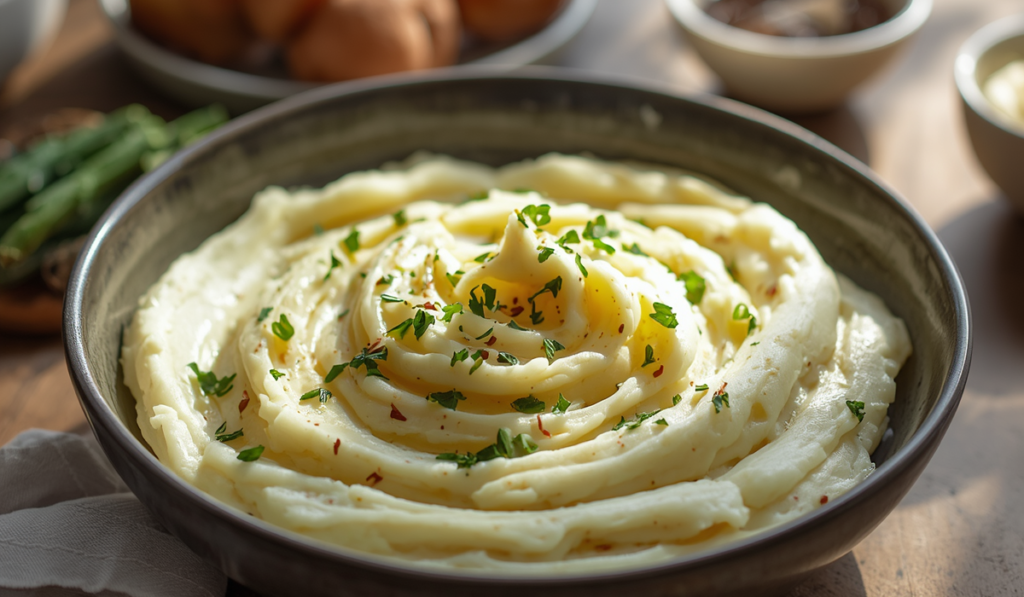
You don’t need heavy cream to make mashed potatoes creamy. Creaminess comes from the right potato, the right technique, and the right fat. Here’s exactly what that means.
Why cream isn’t actually the secret
Heavy cream appears in a lot of mashed potato recipes, but it isn’t what makes them creamy. Creaminess comes primarily from starch and fat — and both of those are already in the potato. Cream adds richness, but so does butter, sour cream, and warm milk. Gordon Ramsay, Ina Garten, and America’s Test Kitchen all make exceptional mashed potatoes without a drop of heavy cream.
The best potato for creamy mashed potatoes
Start with a high-starch, floury variety. Yukon Gold is the most popular choice — it has a naturally buttery flavour that means you need less added fat to get a rich result. Russet potatoes are higher in starch and give the fluffiest, lightest mash when put through a ricer. Maris Piper and King Edward are the best options in the UK. Avoid waxy varieties like red or new potatoes — they turn dense and gluey when mashed.
The best substitutes for cream in mashed potatoes
Sour cream is the single best swap — it’s thick, rich, adds a subtle tang, and makes the texture noticeably smoother. Warm whole milk combined with generous butter is the closest neutral substitute. Cream cheese folded in after mashing gives a luxuriously smooth result with no cream required. Half and half sits between milk and cream and works well if you want something lighter. For dairy-free mash, warmed oat milk with dairy-free butter is the most reliable option.
Why warm dairy makes all the difference
Always warm your butter, milk, or sour cream before adding it to hot potato. Cold dairy added to hot potato shocks the starch and creates an uneven, sometimes gluey texture. Warm everything together in a small pan first, then fold it in. It takes thirty seconds and makes a noticeable difference to the final smoothness.
Steam-dry your potatoes before mashing
After draining, return the potatoes to the hot pan and shake them over low heat for about 90 seconds. This drives off the surface moisture before you add any fat. Dry potatoes absorb butter and milk far more efficiently than wet ones — and less liquid means a more naturally creamy result rather than a watered-down one.
Use a ricer, not a mixer
A potato ricer pushes cooked potato through small holes with very little force, leaving the starch granules intact and giving you a light, fluffy result. A hand masher works well too. What you want to avoid is a food processor, blender, or stand mixer — any of these will over-work the starch in seconds and turn your mash into something sticky and dense, no matter how good your other ingredients are.
Fold, don’t stir
Once the fat is in, use a spatula and fold gently. Stop the moment everything looks combined — even if it seems slightly under-mixed. The mash will come together on the plate. Every extra stir after that point releases more starch and makes the texture stickier. The biggest mistake most home cooks make is continuing to work the mash in search of a perfectly smooth finish. That smoothness is already there — just stop sooner.
Mashed potatoes with sour cream and no milk
Replace all the milk with four to five tablespoons of full-fat sour cream. The result is thick, rich, and deeply flavoured — closer to a loaded baked potato than a classic side dish. This version holds its shape well when reheated, which makes it the best choice for Thanksgiving mash or anything made ahead of time.
Butter-only mashed potatoes
Skip all liquid entirely and use only butter — around 100g per kilogram of potato. This is the French method, known as pommes purée. The result is incredibly silky, intensely flavoured, and rich in a way that cream can’t quite match. The key is to add the butter gradually and fold it in off the heat so it emulsifies into the potato rather than pooling at the bottom.
Creamy garlic mashed potatoes without cream
Add three or four garlic cloves directly to the boiling water with the potatoes. By the time the potatoes are cooked, the garlic is soft and mild — mash it straight in. Alternatively, roast a whole head of garlic and squeeze the caramelised cloves in after mashing. Use sour cream and butter as your base and the result is one of the most flavourful mashed potato dishes you can make without cream.
Cream cheese mashed potatoes
Soften 80g of cream cheese and fold it into the mash after ricing or mashing. It melts in completely and gives an incredibly smooth, rich texture. Cream cheese also makes mashed potatoes reheat better than butter and milk — it holds the emulsion together. This is the best base for make-ahead mashed potatoes.
Dairy-free creamy mashed potatoes
Use warmed oat milk and good dairy-free butter in the same quantities you’d use their dairy equivalents. The result is surprisingly creamy. Stir in a tablespoon of good olive oil at the end for extra silkiness. Coconut cream works well too, especially in sweet potato mash where the slight sweetness is an asset rather than a distraction.
Frequently asked questions
What people ask most
Can you make creamy mashed potatoes without heavy cream?
Yes. Warm whole milk and butter is the classic combination and produces excellent results. Sour cream, cream cheese, and half and half are equally good alternatives — each creating a rich, creamy texture without any heavy cream.
What is the best substitute for cream in mashed potatoes?
Sour cream is the best single substitute. It adds richness, body, and a mild tang that actually improves the flavour. Warm whole milk with generous butter is the best neutral option if you don’t want any change in taste.
Do mashed potatoes need cream to be fluffy?
No. Fluffiness comes from the potato variety, steam-drying after boiling, and using a ricer. Cream adds richness but has no effect on fluffiness at all. You can make extremely fluffy mashed potatoes with nothing but butter.
Can I use sour cream instead of heavy cream in mashed potatoes?
Yes — and many cooks prefer it. Sour cream is thick, rich, and gives an excellent texture with a subtle tang. Use it 1:1 in place of cream, or combine it with butter for a richer result. It also reheats more smoothly than cream does.
What makes mashed potatoes creamy without dairy?
Technique, mostly. Steam-dry the potatoes before mashing, use a ricer, fold gently, and stop early. For the fat component, warmed oat milk and dairy-free butter work well. A tablespoon of olive oil adds silkiness without any dairy at all.
What are the best potatoes for creamy mashed potatoes?
Yukon Gold for natural butteriness and smooth texture. Russet for the fluffiest, lightest result. Maris Piper or King Edward if you’re in the UK. All are high-starch, floury varieties — the only kind worth mashing.
How do you make mashed potatoes creamy with just milk and butter?
Warm the milk and melt the butter together first. Add them to the riced potato in two stages, folding gently with a spatula each time. Stop as soon as everything is just combined. The warmth of the dairy and the gentleness of the fold are what make this work — not the quantities.
Cream has always been optional. What mashed potatoes actually need is a good potato, dry heat, warm fat, and a light hand. Get those four things right and the result is everything cream was ever supposed to give you — and often better.