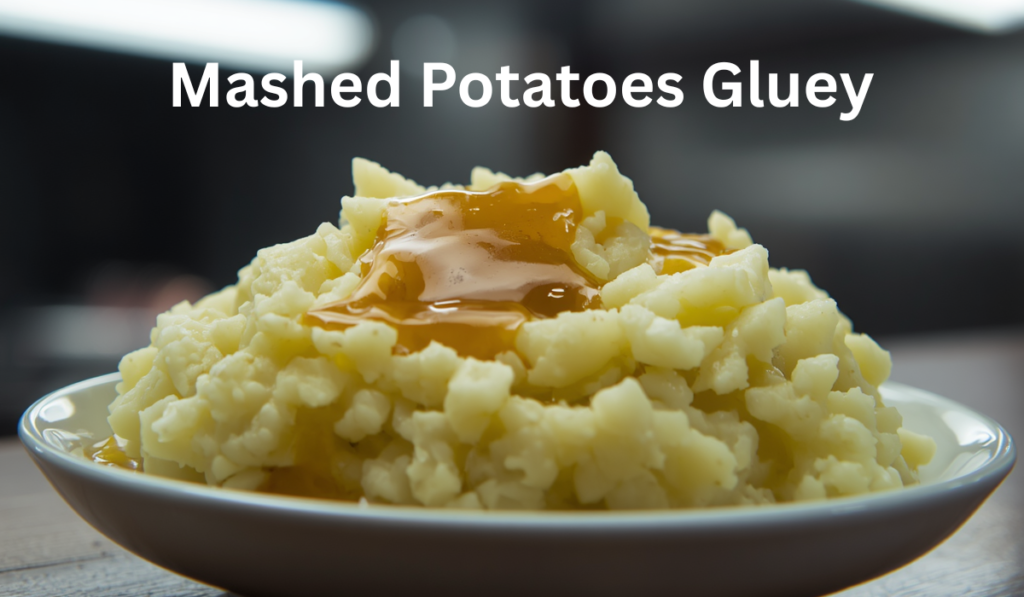

What causes gluey mashed potatoes?
The short answer: starch. Specifically, over-released starch caused by over-processing, the wrong potato variety, or too much water in the mix.
Potatoes contain two types of starch: amylose and amylopectin. When potatoes are cooked, heat ruptures the starch granules, releasing these molecules into the surrounding liquid. Under normal circumstances — gentle mashing, minimal water — this creates the fluffy, tender texture we love. But when you over-work the potato, either by mashing too vigorously or using a food processor, you physically shred the starch granules and release a flood of sticky amylose. The result is something closer to glue than food.
There are several root causes. Understanding why mash potato goes gluey is the first step to solving it:
Over-mashing
Working the potatoes for too long — especially with a stand mixer, hand mixer, or food processor — shreds cell walls and releases maximum starch. This is the most common culprit.
Wrong potato variety
Waxy potatoes (red, new, fingerling) have more moisture and less starch than floury varieties. They hold together beautifully in salads, but become gluey when mashed hard.
Too much water
Boiling in excess water, or not draining and drying the potatoes thoroughly before mashing, dilutes fat and activates more starch-releasing action.
Cold butter or milk
Adding cold dairy to hot potatoes can cause the starch to seize up unevenly, contributing to a gummy texture. Always warm your dairy before adding.
| Potato type | Starch level | Gluey risk | Best for mashing? |
|---|---|---|---|
| Russet / King Edward | High | Low (if not over-worked) | ✅ Yes — best choice |
| Maris Piper / Yukon Gold | Medium-high | Low-medium | ✅ Excellent, fluffy result |
| All-purpose / White | Medium | Medium | ⚠️ Acceptable with care |
| Red / Waxy / New | Low | High | ❌ Avoid for mashing |
| Fingerling | Very low | Very high | ❌ Not suitable |
Can you fix gluey mashed potatoes?
The honest answer is: sometimes yes, sometimes no — and it depends on how gluey they’ve become. Mild glueyness is very fixable. If your mashed potatoes have turned into something resembling concrete, there are limits to what rescue attempts can do, but they can still be repurposed into something delicious (more on that below).
Key insightOnce starch is fully over-released through excessive working, you cannot un-release it. You can, however, dilute its effect or mask the texture by transforming the dish into something else entirely.
The good news shared widely on communities like Reddit’s r/Cooking and r/AskCulinary (discussions on how to fix gluey mashed potatoes are surprisingly common) is that a few targeted interventions — adding more fat, folding in a potato ricer result, or converting into potato cakes — can salvage even a fairly sticky batch.
How to fix gluey mashed potatoes
If your mashed potatoes are gluey, don’t panic and don’t mash more. Every additional stir makes it worse. Here’s what to do instead, in order of effectiveness:
1: Stop mashing immediately
The number one rule: put the masher down. Any additional working of the potato will make it stickier. Even stirring to incorporate ingredients can worsen the texture at this stage.
2: Add more fat
Warm butter and cream coat the starch strands and can reduce their ability to stick together. Add a generous knob of warm (not cold) butter and a splash of warm cream or milk, and fold in very gently with a spatula — not a whisk or masher. Don’t stir aggressively.
3
Fold in freshly riced potatoes
If you have extra potatoes, cook them and pass them through a potato ricer (the gentlest mashing tool). Fold this fluffy, low-starch addition into your gluey batch to dilute the sticky texture. This is the most effective fix for mild to moderate glueyness.
4: Spread and dry in the oven
Spread the gluey mash thinly on a baking tray and place it in a low oven (150°C / 300°F) for 15–20 minutes. This evaporates excess moisture, which is part of what makes them sticky. Once drier, fold in butter and taste again.
5: Transform them (see below)
If the texture is beyond rescue as a side dish, pivot. Gluey mashed potatoes are actually ideal for potato cakes, gnocchi, croquettes, or as a thickener in soups. The sticky starch becomes an asset.
Avoid thisDon’t add more liquid hoping to loosen the texture. Water and milk make gluey mashed potatoes even stickier — you need fat (butter, cream) not water-based liquid.
Is it ok to eat gluey mashed potatoes?
Yes — gluey mashed potatoes are completely safe to eat. The over-released starch that makes them sticky is not harmful in any way. There is no food safety concern with a gluey texture; it is purely a quality and palatability issue.
The verdict
Gluey mashed potatoes are safe. You can still eat them.
The texture is unpleasant, but there’s no health risk whatsoever. The issue is culinary, not microbiological.
That said, if the texture is very off-putting, most people find repurposing them into another dish far more satisfying than forcing down a bowl of potato paste. The nutritional content — potassium, vitamin C, fibre — remains the same regardless of texture.
What to do with gluey mashed potatoes
This is where things get creative. Gluey mashed potatoes are incredibly useful in the right context. Their stickiness — the very thing that makes them a failed side dish — becomes a binding asset in other preparations.
6 great uses for gluey mashed potatoes
- Potato cakes / patties — Shape into rounds, coat in breadcrumbs, pan-fry until golden. The sticky starch holds them together beautifully without eggs.
- Gnocchi — Mix with a little flour and egg yolk, roll into dumplings, and boil or pan-fry. The over-released starch actually helps the dough hold.
- Croquettes — Coat in egg and breadcrumbs, then deep-fry. Crispy outside, creamy inside.
- Soup thickener — Stir spoonfuls into a vegetable or chicken broth to add body and creaminess.
- Shepherd’s pie topping — Spread over a meat filling and bake. The gluey texture crisps up nicely at the edges.
- Pierogi or dumpling filling — Works perfectly inside pastry or dough wrappers where the texture is hidden.
How to avoid gluey mashed potatoes
Prevention is always better than cure. Here’s how to make perfectly fluffy mashed potatoes every single time, and how to avoid gluey mashed potatoes for good.
Choose the right potato
This is the single most impactful choice. Use high-starch, floury varieties: Russet, King Edward, Maris Piper, or Yukon Gold. These varieties have large starch granules that break apart fluffy rather than sticky when mashed gently.
Don’t over-boil
Cook until just tender — a knife should slide in with slight resistance. Over-cooked potatoes absorb too much water, making them wet and more prone to glueyness when worked. Boil in well-salted water cut into even-sized chunks so they cook at the same rate.
Steam-dry after boiling
Once drained, return the potatoes to the hot pan and let them sit over low heat for 1–2 minutes, shaking occasionally. This drives off surface moisture before you add any dairy. Dry potatoes absorb fat better and result in fluffier mash.
Use a ricer or food mill
A potato ricer or food mill is the gold standard tool. It pushes potato through small holes with minimal shearing force, leaving starch granules intact. Avoid food processors, blenders, and hand mixers — they all shred starch.
Warm your dairy
Always add warm (not cold) butter, cream, or milk. Cold fat hitting hot potato causes uneven starch absorption and a gummy texture. Warm your cream in a small saucepan and melt the butter before adding both.
Fold, don’t beat
Once you start adding dairy, use a gentle folding motion with a rubber spatula. Stop as soon as everything is just incorporated. Resist the urge to keep going — the more you work it, the stickier it gets.
Pro tip from test kitchensThe moment your mashed potatoes look fluffy and combined, stop. They will look slightly under-mixed and that’s fine. They will come together on the plate. The biggest mistake home cooks make is over-mixing to achieve a “smooth” look — that smoothness comes at the cost of texture.
Why instant mashed potatoes go gluey
Instant mashed potatoes can also turn gluey, though for a slightly different reason. Instant mash is made from pre-cooked, dehydrated potato flakes. When you add liquid, the flakes rehydrate — and if you add too much liquid, or add it too quickly, or stir too aggressively, you activate excess starch in the same way as over-mashing real potatoes.
The fix for gluey instant mashed potatoes is to add the liquid in stages (less than the packet suggests, initially), stir very gently, and stop as soon as the texture looks right. If they’re already gluey, the same rescue techniques apply — add warm butter and stop stirring.
Note on instant varietiesInstant mashed potato brands vary enormously in starch content and flake size. Premium brands tend to use lower-starch potato flakes and are more forgiving. Budget varieties can go gluey very quickly if over-hydrated.
The perfect no-fail mashed potato recipe
This mashed potato recipe is engineered to avoid glueyness. Every step is deliberate. Follow it and you’ll get perfectly fluffy, creamy mash every time.
Perfect Fluffy Mashed Potatoes
Serves 4 · 35 minutes
Ingredients
- 1 kg (2.2 lbs) Russet, King Edward, or Maris Piper potatoes — peeled and cut into even 5cm chunks
- 1 tsp fine sea salt (for the water), plus more to taste
- 100g (7 tbsp) unsalted butter, cubed
- 120ml (½ cup) double cream or whole milk
- Freshly ground white pepper
- Optional: pinch of nutmeg, chives to serve
Instructions
- Place potato chunks in a large pot. Cover with cold salted water by 5cm. Bring to a boil over high heat, then reduce to a steady simmer.
- Cook for 15–18 minutes, until a knife slides in with just a little resistance. Don’t over-cook.
- Drain thoroughly in a colander, then return the potatoes to the hot pan. Shake over low heat for 90 seconds to steam-dry. The surface should look chalky and dry.
- Meanwhile, gently warm the cream and butter together in a small pan until the butter is melted and the mixture is steaming but not boiling.
- Pass the dry potatoes through a potato ricer or food mill back into the pan. Do not use a food processor.
- Pour two-thirds of the warm butter-cream mixture over the riced potato. Using a rubber spatula, fold gently — think of it like folding egg whites. Stop when just combined.
- Taste and adjust seasoning. Add remaining cream-butter mixture only if needed for consistency. The mash should hold a soft peak when scooped.
- Serve immediately, topped with an extra knob of butter melting on top.
Why this worksThe ricer does all the hard work without over-working the starch. Steam-drying before mashing removes excess water. Warm dairy means the fat absorbs evenly. Folding instead of beating keeps starch granules intact.
Frequently asked questions
Can you fix gluey mashed potatoes after they’ve been made?
Yes, to a degree. Mild glueyness can be improved by folding in warm butter and cream, or by adding freshly riced potato to dilute the over-worked starch. Severely gluey mashed potatoes are better repurposed as potato cakes, gnocchi, or a soup thickener.
Can you still eat gluey mashed potatoes?
Absolutely. Gluey mashed potatoes are completely safe to eat — the texture is the only issue. There are no food safety concerns. If the texture is too unpleasant to enjoy, repurpose them rather than throwing them away.
What causes gluey mashed potatoes?
The primary cause is over-released starch from over-mashing, using a high-powered appliance (food processor, blender, stand mixer), using waxy potato varieties, or adding cold dairy to hot potatoes. The released amylose starch molecules link together and create a sticky, glue-like consistency.
Why do my mashed potatoes always turn out gluey?
If this happens repeatedly, check three things: your potato variety (switch to Russet or Maris Piper), your tool (switch to a hand masher or ricer, never a food processor), and your technique (fold, don’t beat, and stop earlier than you think you should).
How to fix gluey mashed potatoes — Reddit’s top suggestions?
The r/Cooking community consistently recommends two approaches: adding generous amounts of warm butter folded in very gently, and turning the batch into potato cakes or gnocchi where the stickiness becomes an advantage. Many Reddit users also suggest the potato ricer as the single best investment for better mash going forward.
Why do instant mashed potatoes go gluey?
Instant mashed potato flakes rehydrate quickly when liquid is added. If too much liquid is added, or if the mixture is stirred too vigorously, excess starch is activated and the result becomes gluey — the same mechanism as with real potatoes. Add liquid slowly, stir gently, and stop early.
What to do with gluey mashed potatoes?
Potato cakes, gnocchi, croquettes, pierogi filling, and soup thickening are all excellent options. The sticky starch that makes them fail as a side dish makes them ideal as a binder in other preparations. Don’t throw them away — transform them.
In summary:
Gluey mashed potatoes are caused by over-released starch from over-mashing, the wrong potato variety, or excess moisture. They are safe to eat but texturally unpleasant. Mild cases can be fixed with warm butter and gentle folding, or by adding riced potato. Severe cases are best repurposed as potato cakes or gnocchi. To prevent glueyness: use floury potatoes, steam-dry after boiling, use a ricer, warm your dairy, and stop mashing sooner than you think.